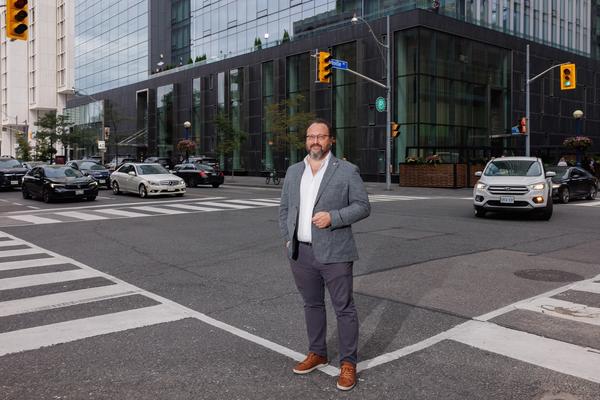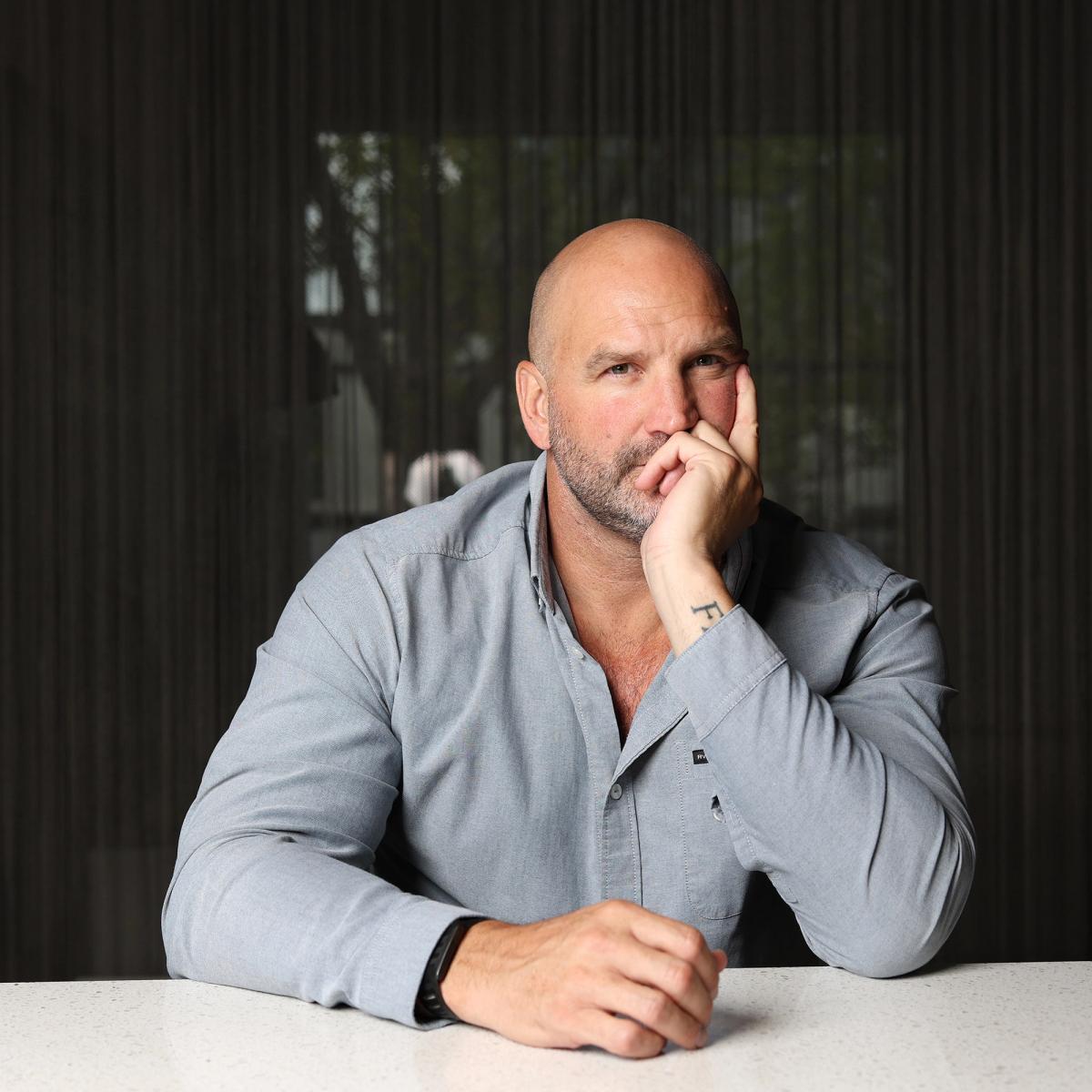
Glenn Cowan, a former squadron commander in Canada’s elite Joint Task Force 2 (JTF2), a special operations military unit, has led hostage recovery missions and is the only Canadian to skydive seven times in seven days on seven continents, a world record for him and his team. He also comes from a long line of entrepreneurs. His great-grandfather provided cocoa mix for hot chocolate to the British Expeditionary Force during the First World War. His grandfather ran the company that manufactured the childhood gum staple Dubble Bubble in Canada. His father created a Christmas decoration company. Cowan, who studied stock tables as a child, founded ONE9, a defence venture capital fund, while he was a military squadron commander. It is now the defence component in Kensington Capital, a subsidiary of AGF Capital Partners, which has $54 billion in assets under management.
As a squadron commander in JTF2, one would have thought you would have had other things on your mind than venture funds.
Even while in the military, I liked investing. We were deployed in the global war on terror, and during some of those missions we received some great danger and hardship pay. So when we got back from some of those missions, rather than buying some jacked-up truck, I started investing in commercial self-storage assets. That was really my start. I founded my company while I was a squadron commander. My lawyer asked if it would be a numbered company, and I looked at my helmet and my call sign was 1-9. I called the company ONE9.
Are there similarities between commanding a JTF2 squadron and venture capital?
Special forces is a game of operating on first principles. Be brilliant at the basics, don’t overthink and don’t overcomplicate your environment, and be a master of what you can control in an environment where you can control it. We are in a high-risk, high-reward environment. We know that no plan is going to survive first contact with the enemy or the market, so we need to develop contingency plans. We need carefully selected, curated teams with bespoke expertise, and we need an exit plan. Special forces get in, they strike and get out. It is eerily parallel to deploying venture dollars into high-risk investments. You have to be comfortable being uncomfortable and make decisions without complete knowledge, depending on expertise. In venture capital, you might bankrupt a company and lose all your money. [In special forces], we might have a failed mission, we might crash a helicopter. But what’s important is you don’t cut and run. You don’t cower. Both are an exercise in risk mitigation.
![“We classify the big toys [like these fighter aircrafts at a defence industry trade show in Ottawa] as exquisite systems, and we need to continue to buy those, but the opposite end of that spectrum has emerged in cutting-edge venture capital – investing in small, fast, inexpensive, rapidly deployable systems,” Cowan says.](https://cdn.sanity.io/images/l3tzmu37/production/6db715b8e576e7f7aa9ad86200f19f7d9cc116ef-1440x931.jpg?auto=format&fit=max&q=75&w=800)
How have attitudes toward defence investment changed in Canada?
When we brought the first fund to market [around 2018], no investors – no government or institutional investors – wanted to touch defence. It was a taboo, and an asset class treated like big tobacco, pornography, gambling apps, crypto and cannabis. At the same time, Canada has always been proud of its military heritage. We wanted to make sure our men and women were properly equipped. But when we tried to invest, we got,“Oh no, I can’t touch it. Too much credibility risk.” Kensington Capital was the only institutional investor in the country that would touch it. I would say the geostrategic reality of the world has changed, and we have finally woken up to it. Our physical geography puts us on the front line with an aggressive Russia in Europe and a very aggressive China declaring itself an Arctic nation. We were vulnerable and I think there has been an “aha” moment.
What have been the problems with defence procurement in this country?
Military and government procurement is always a bit of a gong show in any country, but Canada was a special breed of gong show. There was a lethargic bureaucracy that ground procurement to a halt. The Defence Investment Agency is an attempt to instil some non-public service leadership; the process is being streamlined to help expedite procurement. There is structural change and not just cyclical change. This is the type of structural shift that private capital allocators will want to see to know this is an investable business. It’s no longer taboo.
What is your reaction to reports that Doug Guzman is planning to step down as head of the Defence Investment Agency?
I was optimistic when the DIA was led by Doug Guzman, a former banking executive, an expert on financing – and not a public servant. I thought that made for a strong ability to impact and drive change with procurement reform. While I’m not close to the [situation], I think it sends a strong negative signal that the structural changes are going to be harder to implement than originally thought.
Get our weekly newsletter – the people, places, and ideas revealing where Canada is headed.
Beyond the big-ticket items like fighter jets and submarines, what should we be investing in?
We classify the big toys as exquisite systems, and we need to continue to buy those, but the opposite end of that spectrum has emerged in cutting-edge venture capital – investing in small, fast, inexpensive, rapidly deployable systems. And it just so happens that with those inexpensive systems, I can kill every one of those exquisite systems. A modern military needs both of those ends of the spectrum to operate. We watched Uber completely dismantle the taxi industry. We watched Airbnb challenge big hotels. We’re now seeing well-capitalized, entrepreneurial, visionary founders disrupting the way that defence does business. Defence is having its Uber moment.
What are our next steps?
I would decentralize financial decisions to the commander’s level. That is how you speed to market. We empower our military commanders with responsibility for strategic missions, we trust them on the risk to human life and limb, and then we hamstring them on financial spending authorities.
And I would encourage Canadian procurement entities to move even faster and assume more risk. Procurement has always tried to be open and fair. We avoid sole sourcing. We have to pick some winners as a country. That pace of change is required given the uncertainty of the geostrategic world in which we live.
This interview has been edited for length and clarity.