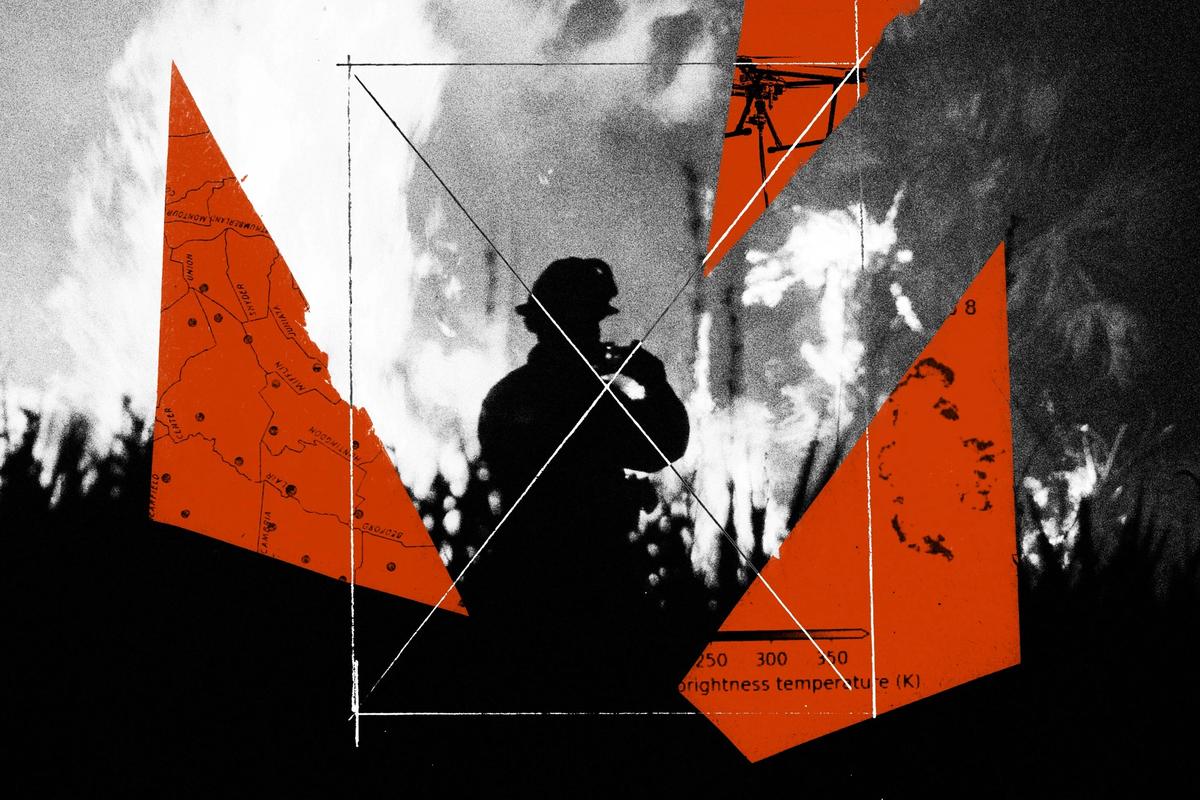
Outside a drone hangar at Nenana Municipal Airport, judges conferred over what, if anything, could still be salvaged from a day of expensive failures.
An $11-million prize for reinventing how wildfires are detected and fought was at stake.
The panel of judges, whose expertise spanned wildfire science, emergency management, aviation and autonomous drones, gathered outside the hangar in Alaska, where the finals for XPRIZE Wildfire were taking place this summer.
Anduril Industries, the American defence-technology behemoth competing with a fleet of autonomous aircraft, had failed to detect either of its first two test fires. It was entitled to three, but less than two hours remained in its eight-hour trial.
Kevin Marriott, XPRIZE Wildfire’s senior technical lead, who designed the test and served as the go-between for the judges, competitors and aviation-safety staff, asked to confer. The judges outlined three options: Anduril could withdraw; abandon the detection challenge and demonstrate only its suppression drones; or make one more attempt, risking humiliation.
It opted to try again. “Third time’s a charm,” said Anduril engineer Taha Shamshudin, only half-convincingly.
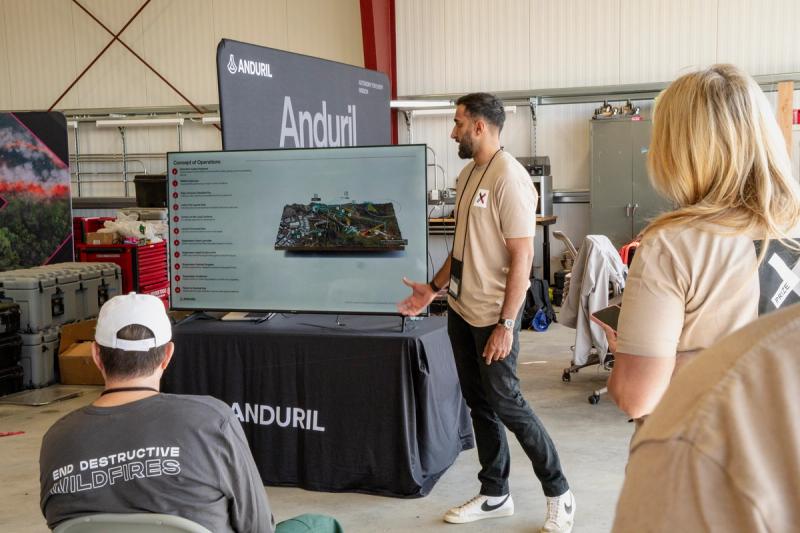
XPRIZE, whose mission is to “tackle humanity’s toughest challenges with bold, scalable breakthroughs,” has spent more than 30 years offering large cash awards for solutions to problems that conventional markets have failed to solve. The non-profit raises the purse and the cost of running the competition from sponsors that include philanthropists, foundations, corporations and, in some cases, governments. Its wildfire competition began four years ago with two tracks – autonomous response and space-based detection – and an audacious brief: end destructive wildfires.
Wildfire has always shaped northern forests. What has changed is its scale and consequence. Canada’s record-breaking 2023 season burned more than 18.5 million hectares, displaced communities, blanketed cities across North America in smoke and produced unprecedented emissions. As hotter, drier conditions lengthen fire seasons, the fires that escape initial attack are becoming more difficult, and more dangerous, to contain.
The Wildfire autonomous track began with 29 qualified teams. Fifteen reached the semifinals, during which XPRIZE tested 13 systems in the field. In January, five finalists were selected for the showdown in Nenana, where the task was set. During an eight-hour test, each autonomous system of drones or robots had 10 minutes to find and extinguish a high-risk controlled burn hidden somewhere within 1,000 square kilometres – without attacking a decoy barbecue or campfire lit by University of Alaska volunteers who stood nearby to put out any fire the machines missed. Sensors on the autonomous systems could see, hear or smell smoke; algorithms would decide what was real; drones or robots would deliver suppressant. No pilot would fly toward the flames.
But nothing about the week went as planned, including my story. Few countries have more at stake in the search for a better way to fight wildfire than Canada, and headway already achieved by FireSwarm Solutions, the competition’s only Canadian finalist, had given me reason to believe one might be emerging here. I had profiled the company for Be Giant months earlier. On my first morning in Alaska, outside the judges’ rented lodge, an XPRIZE staffer gave me a puzzled look. Hadn’t I heard? FireSwarm had withdrawn. No, I had not.
Keep up with the people, places, and ideas shaping Canada's future. Subscribe to our weekly newsletter.
Co-founder Melanie Bitner later told me the company had closed a seed round and was concentrating on commercialization so it could work with customers sooner. Another finalist, Data Blanket, had dropped out too. Now the finals were down to AURA Foresight, Anduril, Germany’s Dryad Networks and Wildfire Quest, a partnership between Silicon Valley high school students and professional drone companies.
Regrouping, I followed Wildfire Quest into the field, shadowing a ragtag team of high-achieving teenagers and European engineers as they prepared their equipment. Their original suppressant capsule had failed to receive Federal Aviation Administration (FAA) approval, team leader Danny Kim told me, forcing them to improvise a system of heavy-duty, vacuum-sealed bags released through a trapdoor. The next morning, hours before their scheduled test, I learned that they had also withdrawn. XPRIZE would not tell me why.
Five teams qualified for Alaska, four teams had made the trip, and upon arrival the field was suddenly down to three: Anduril, Dryad and AURA remained. But even robotic giant Dryad, which was scheduled to kick off the competition, had to postpone when crucial equipment failed to arrive in time. Now even Anduril, the defence-technology giant with a fleet of polished aircraft and a mission-control tent full of laptops, was struggling to make its machines agree about what they were seeing.
This did not necessarily mean the prize was failing. It might mean XPRIZE had selected a problem worthy of one.
The idea of paying for an outcome instead of a promise predates Silicon Valley by centuries. In 1795, Napoleon’s government offered 12,000 francs for a practical way to preserve food for troops. Nicolas Appert, a Parisian confectioner, spent years heating food in sealed glass bottles. He did not understand microbes – the germ theory was decades away – but the method worked. He received the award in 1810 on the condition that he publish it.
In 1919, New York hotelier Raymond Orteig offered $25,000 for a non-stop flight between New York and Paris. Eight years later, Charles Lindbergh crossed the Atlantic alone in the Spirit of St. Louis. The prize gave a dangerous ambition a number, a deadline and a crowd.
That story obsessed Peter Diamandis. In 1996, he announced a $10-million prize for a privately financed reusable spacecraft that could carry three people 100 kilometres above Earth twice within two weeks. The money did not yet exist. It arrived in part through sponsorship from the family of Anousheh Ansari, an Iranian-American telecom entrepreneur who would later travel to the International Space Station and become XPRIZE’s CEO. In 2004, SpaceShipOne completed its second flight and won the prize.
The formula has since been applied to oil spills, ocean mapping, carbon removal, pandemic masks and machines that diagnose disease. First, XPRIZE finds a problem that can be reduced to measurable objectives. Then it finds sponsors, builds rules and recruits teams willing to spend their own money pursuing a purse only one – or none – will collect.
In 2018, the decade-long Google Lunar XPRIZE ended without a grand-prize winner. No privately funded team could land a robot on the moon, move it 500 metres and transmit high-definition images by the deadline. XPRIZE still credits the competition with mobilizing investment and creating durable space companies, including Astrobotic, which recently won NASA contracts to carry payloads to the moon for the lunar space station. But the $30-million purse remained unclaimed. In 2023 and 2024, the XPRIZE Rapid Reskilling competition and XPRIZE Feed the Next Billion competition similarly concluded without a grand-prize winner.
XPRIZE Wildfire took years to fund, requiring a coalition of backers led by the Gordon and Betty Moore Foundation and PG&E. Its $11 million covers the two tracks, milestone awards and a $1-million detection bonus; the first-place autonomous-response team can win up to $4.5 million. That sounds like substantial money until you look around the hangar crowded with towers, hard cases, communications equipment and aircraft. FireSwarm estimated that competing through the semifinal field test, held in Sweden last January, as well as the finals testing in Alaska would cost the company roughly $1 million. One professional partner on Wildfire Quest supplied heavy-lift drones said to cost about $1 million each. While teams rack up seven-figure costs just to compete, the “jackpot” starts to look more like a partial reimbursement.
Andrea Santy, XPRIZE Wildfire’s executive director, acknowledged the imbalance. Even in fire-scarred California, finding funders took years, she says. The competition launched in 2023, just as Canada endured its worst fire season on record and released roughly as much carbon as India does from fossil fuels in a year. Then came the 2025 Los Angeles fires. Santy believes a purse raised now would be larger.
But the prize money is only part of the inducement. While a finalist badge can attract investors, partners and customers, it can also detract from the overarching goal, or even overtake it. FireSwarm’s decision to pursue commercialization illustrated the strange economics of an incentive prize: a team may leave because the glow of being a finalist creates its own opportunity cost.
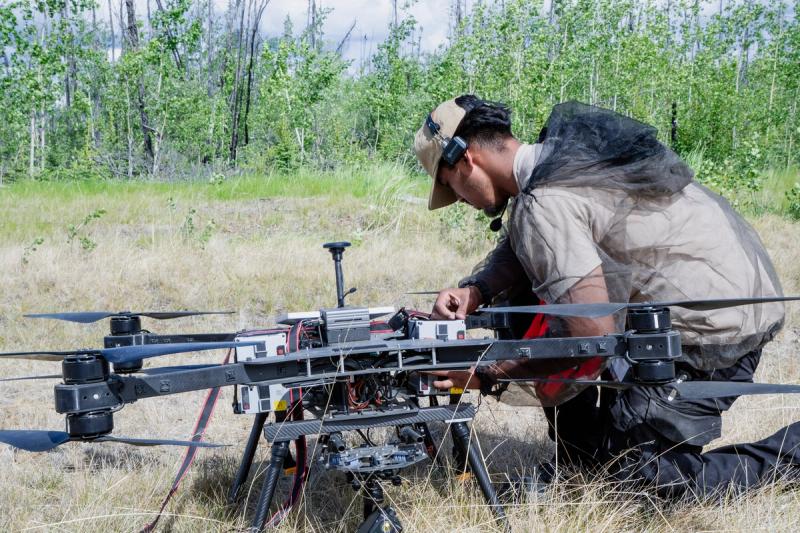
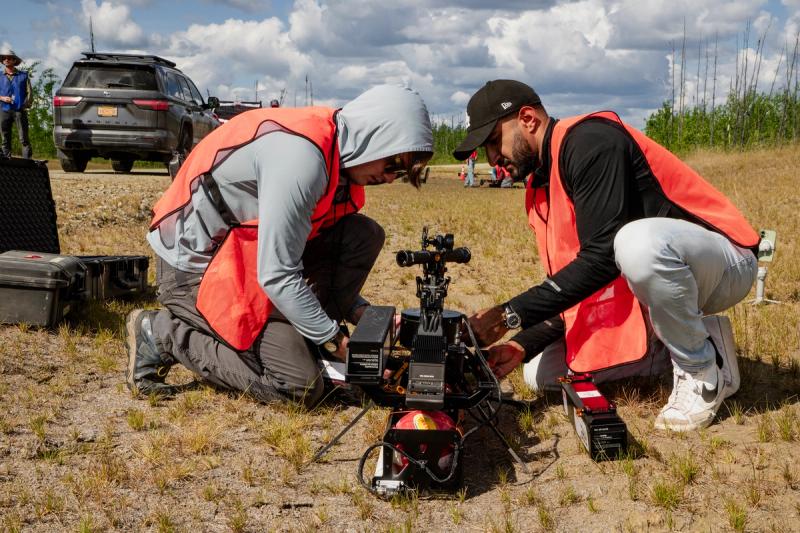
Founded to fight wildfires, FireSwarm has since joined NATO’s DIANA accelerator and expanded into the defence industry. After it withdrew from XPRIZE Wildfire, one of its technology partners, Trident Sensing, found another route into the finals: the small Utah company, run by engineer Colin Pollard and his father, joined Anduril’s effort. Trident’s dome-shaped sensors can ride on ordinary aircraft and scan for fire; Anduril supplied the aircraft, communications network and Lattice software that would turn fire detections into commands.
That put mild-mannered Pollard among the fist-bumping tech bros and ex-military operators inside one of Silicon Valley’s most conspicuously militaristic companies. Anduril builds border-surveillance towers and sells autonomous drones, rockets, submarines and weapons systems. Trident’s partnership with Anduril and FireSwarm’s expansion into defence reflect the same economic reality: fire agencies struggle to finance unproven machinery, while the defence industry has both the money and the appetite for it.
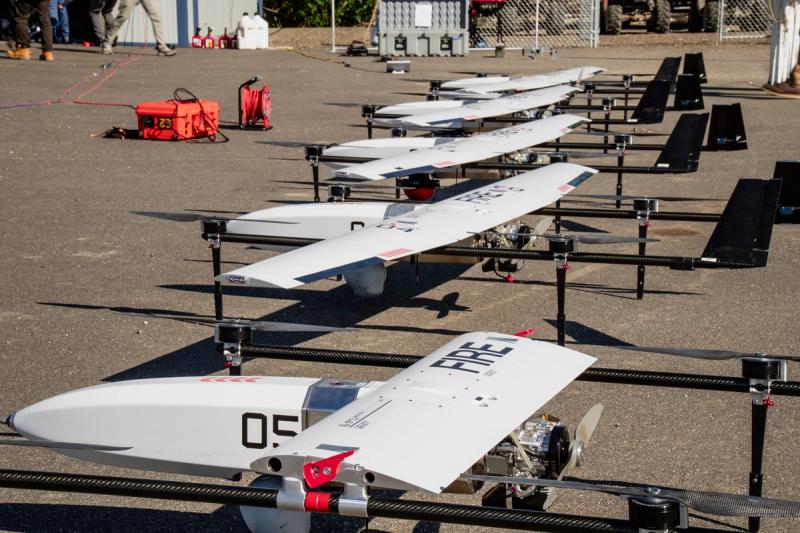
On Anduril’s staging day, its military aesthetic was hard to miss. Five white SuperVolo aircraft sat in formation on the pavement, each with “FIRE” printed across a wing. The vertical-takeoff planes looked like miniature private aircraft grafted onto multicopters. Everything else came in matte black and gunmetal. Suppression drones called Ghost-X arrived folded inside long black cases and snapped together like rifles. Even carrying fire retardant, they looked built for a battlefield. In the back seat of a truck, their red, impact-triggered suppressant balls looked unnervingly like bombs.
There was a spectacle each time a Ghost revved for takeoff and genuine excitement when, to pass the time, Shamshudin let me and the judges try to assemble one ourselves. But by late afternoon, the novelty had worn off. Not one fire, not even a decoy, had been detected, let alone suppressed, and Anduril was running out of reasons. A sensor “may have vibrated itself to death.” A drone clock ran 15 minutes fast, blocking data synchronization. A video feed vanished. However minor a glitch, it threatened to break the chain from detection to delivery.
Anduril’s system worked like an autonomous relay: its Lattice software pulled together information from cameras and sensors, then co-ordinated drones to move from detection to suppression. Its third attempt began with a fix that bred another problem: assuming the sensors were acting shy, the team dialed up their sensitivity and suddenly the map flooded with yellow flame icons. The sensors were now mistaking sun-warmed rocks for fires. One very big, pesky rock accounted for most of them.
That’s about when the aviation-safety officer called over: “We got one hour, Kevin.” Marriott, the XPRIZE official coordinating the trial, disputed when the eight-hour test had begun but was interrupted: “FAA doesn’t care about that.”
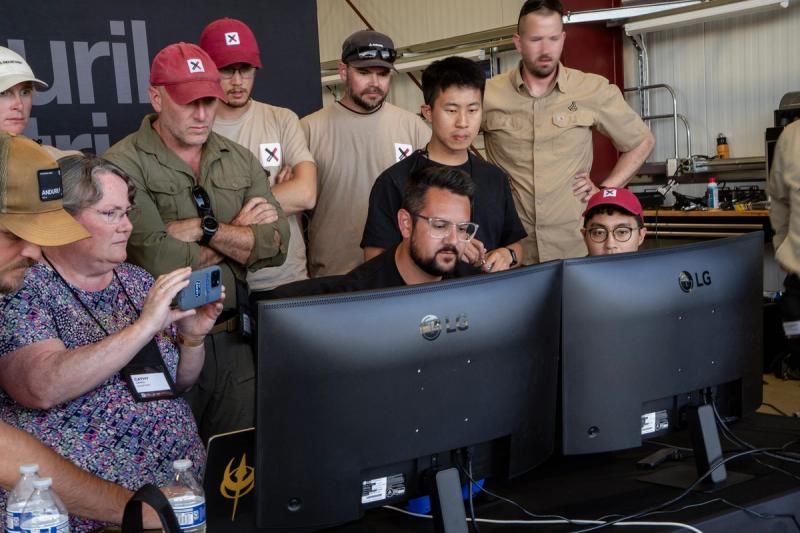
But shortly after 6:20 p.m., moments before the test window closed, a yellow flame appeared on the gridded satellite map: FIRE. “Am I correct that it’s detected a fire?” I asked Pollard.
He leaned toward the display. “It has a track,” he said. “I don’t know why we don’t have a thumbnail image.” A Trident sensor aboard one Supervolo had registered a target near the main road. Another aircraft carrying a Trillium camera turned toward it. A black-and-white image loaded: a white-hot mass, finally, not a rock.
“We got it,” someone called. “We got it, we got it.”
Marriott came over. Judges stood. Shamshudin raised his hand for a high five, then punched his palm. “Holy shit.” Another engineer ordered someone to fill in the form and take a screenshot. Christian Teixeira, Anduril’s test lead, shared one incredulous look with a colleague, then returned to the monitors.
The nearest Ghost was asset 4202. It was ready to carry suppressant over the hill. Then we were informed that an aircraft unrelated to the XPRIZE finals had, for reasons unknown, made an emergency landing on the main road. Aviation safety ordered Anduril’s fleet home.
After two missed fires, the team had detected and confirmed one at the last possible moment. It had not suppressed it; its final flight remained grounded when the real world entered the test range.
Ansari places Wildfire among the more complex environments XPRIZE has attempted. The difficulty was not inventing a better camera, sensor or drone. It was making aircraft, communications networks, artificial intelligence, fire suppressant and aviation regulations function as one system, in a forest, against the clock. “We don’t tell people to test their solutions in the labs,” she says. “We want the solutions to be in the real live environment where they have to be implemented.”
XPRIZE allowed Anduril to return the next day and retry the suppression portion of the test, however, it still did not fully extinguish the fire – the standard the judges required for the grand prize. At the final stage, Ansari says, what separates teams is “rigour and creativity.” The hard environment reveals weaknesses and creates relationships with regulators and customers. Winning a test is not the same as producing something legal, affordable and dependable enough for a fire agency. Ansari says the ultimate standard must be much higher: the problem should be actually solved. Until then, XPRIZE looks for evidence that the field is moving toward it.
“If we know we have a solution,” Ansari says, “it’s a matter of figuring out how we deploy the solution and get it to market.”
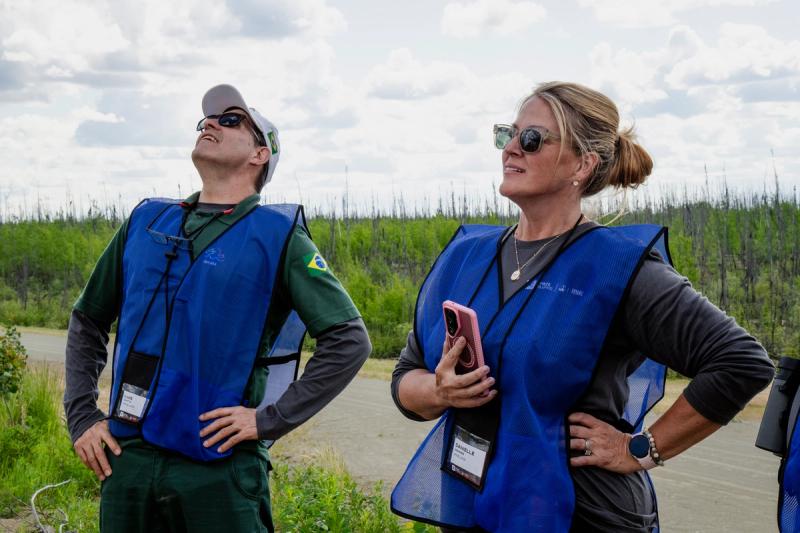
On September 23, XPRIZE announced a winner – sort of. Anduril finished first in the autonomous-response track and collected $2.2 million, including the detection bonus. But neither it nor any other team claimed a $3.5-million grand prize.
When Anduril returned to retry the suppression test, its drone reached the fire and released its payload but failed to extinguish the flames completely. AURA Foresight found its target, only for its drone swarm to miss. Dryad’s network of forest sensors detected and verified a fire, and its drone dropped suppressant. It, too, fell short of putting the fire out. “The suppression part of the tech was just not totally there yet,” an XPRIZE spokesperson later told me. So although Anduril had finished first, the finish line itself remains uncrossed.
But the work doesn't stop there. In all, XPRIZE distributed $4.55 million among the finalists. The unawarded prize money is being redirected into a 12- to 15-month impact phase intended to advance the technology and its deployment.
Wildfire suppression may still be a while away. But other audacious goals – preserved food, transatlantic flight, private space travel – also seemed unachievable at inflection points along the way; their applications seemingly detached from ordinary life. Not so much anymore.
“The progress we are celebrating now is an important step,” Ansari said in the awards announcement, “but the true impact of this competition will be measured by what happens next.”