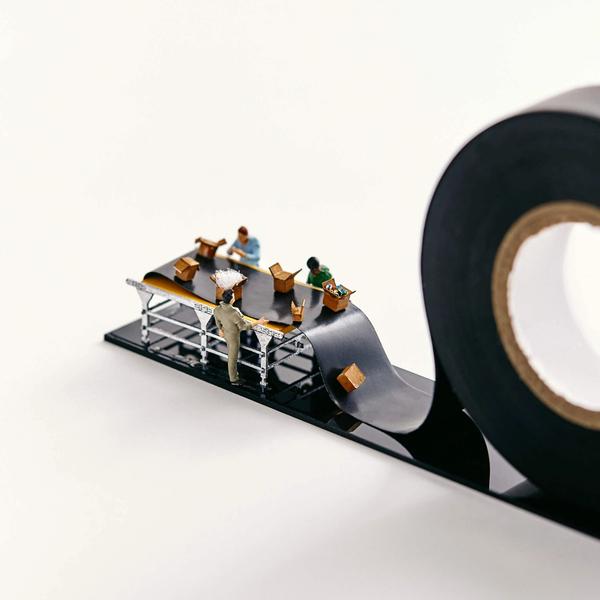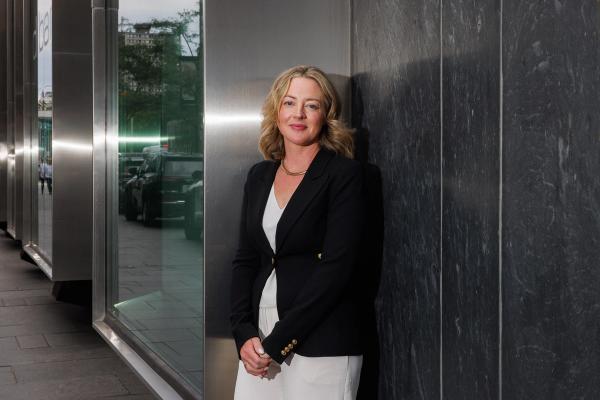
Ben Hertzman grew up visiting his family’s packaging factory on weekends and travelling with his dad to visit suppliers. “The business has always been a part of my life, as long as I’ve been alive,” he says. But joining wasn’t a given – Hertzman wanted to go to university and build a career elsewhere first. “I wanted to stand on my own two feet.”
He spent several years as an account executive at Procter & Gamble before his father raised the idea of him joining Progress Luv2Pak, the family’s Toronto-based business. Hertzman started as a trainee in 2017. Now 37, he became CEO this year and opened a new domestic factory, Gather Packaging, along the way.
Family businesses make up 63 per cent of Canada’s private sector enterprises and contribute half of the country’s gross domestic product and employment, according to research from Family Enterprise Canada. Over the next decade, roughly six in 10 of them are expected to change hands – the largest transfer of business ownership in the country’s history, says Peter Jaskiewicz, the founder and academic director of the Family Enterprise Legacy Institute at the University of Ottawa. “Our family businesses are the backbone of this country,” he says. “This next wave of ownership transfers will be the biggest opportunity we have to chart a new course for Canada as an economy and as a society.”
Get our weekly newsletter – the people, places, and ideas revealing where Canada is headed.
The odds haven’t historically favoured a smooth hand-off. A commonly cited stat says that only 30 per cent of family-owned businesses make it to the second generation, and 12 per cent persist to the third. For decades, the explanation offered for that drop-off has often been generational reluctance – the old “shirtsleeves to shirtsleeves in three generations” myth, the idea that each generation cares less than the last one did.
However, a 2022 survey from the Family Enterprise Foundation found a sharp gap between what older and younger family members believe about their business’s future – and it runs in the opposite direction from the stereotype: 95 per cent of family members under 45 say it’s important that a family member takes over the business, compared with 65 per cent of those over 45; and 87 per cent of younger respondents expect family ownership to continue, versus 70 per cent of older respondents. A BMO survey from 2025 found that nearly a third of gen Z and a quarter of millennials expect to inherit the family business.
Part of what’s changed, at least for the younger generations, may be economic. Youth unemployment in Canada has run roughly double the national rate through 2026, and unemployment among returning students climbed even higher over stretches of the year, according to Statistics Canada’s Labour Force Survey. For a generation facing a tougher entry-level job market than their parents did, a role in the family business may look less like a fallback and more like an opportunity.
“The inherent uncertainty in the labour market, coupled with ongoing crises like the trade war with the United States, might lead youth to reconsider the opportunities they have in their family’s business,” says Jaskiewicz. “Millennials and gen Z look, on average, for more purpose in their work compared to their older peers. They might feel they have more influence in the family business than they would at other companies.”
That shift has been slowly playing out across the country.
Linley McConnell, 34, joined her family’s fourth-generation dry-cleaning business, Gibson’s Cleaners, after a stint working at Deloitte in consulting and then elsewhere in public relations. “I’m a millennial. A lot of us were told to ‘follow your passion and do what you love,’” she says. “The family business isn’t something I actually ever thought I would get into.” But now she thinks that “do what you love” advice is coming full circle, as younger generations see the opportunity to insert their passions into their family business’s day-to-day operations.
After joining the company, McConnell leveraged her PR experience to form a relationship with Canada Goose and help Gibson’s become an authorized Canada Goose dry cleaner. “That’s been a huge opportunity for us to serve more customers and work with such a global brand,” she says. She has also worked with a publicist to become a laundry expert, doing TV spots to educate the public about dry cleaning and fabric care. “That’s been my way of innovating the old-school dry-cleaning world.”
That pattern – leaving and building outside experience, then coming back to build something new – is a trend Jaskiewicz has spent his career studying. Time away, he says, is often a predictor of a successful succession, not a warning sign. “This allows successors to really leapfrog the business to a new level by creating new products and innovations or exporting to new countries,” he says.
The friction in succession planning may have less to do with reluctant kids than with unprepared parents: a 2026 KPMG survey of more than 1,900 family business leaders across 41 countries found roughly three in four are comfortable with the next generation’s capability to take on leadership; however, they might not actively be adequately preparing. Only 20 per cent say succession is a near-term board concern, even as nearly a third expect it to matter more over the next decade.
Nearly two-thirds of Canadian business owners lack formal succession plans, and many family businesses are notorious for informal or verbal agreements with successors. Jaskiewicz says the key is to create an ecosystem with service partners – family enterprise advisers, business advisers, accountants and lawyers – to help facilitate and support the rising generation while giving them the tools they need to succeed. He says a succession should be measured less by whether it happens than by what the next generation will do with it, whether they add their own mark through growth, rejuvenation or genuine innovation.
Ben Murphy, 39, joined Murphy Hospitality Group’s restaurant division in 2014, after several years working seasonally with the Prince Edward Island company’s entertainment arm. He became CEO in December 2021, when his father, Kevin, semi-retired. Murphy credits his father’s succession plan with setting the next phase up for success. “He did an amazing job communicating it thoroughly,” says Murphy. “And he continues to put time into it. It’s been a living document over the past 10 years.”
Murphy and his brothers, Sam and Isaac, now all work in the family business and each has pushed the company into territory their father’s generation never touched. Since 2009, the group has ventured into music festivals, breweries and wineries – and, with the 2022 opening of Mysa Nordic Spa & Resort, wellness tourism. Today, the company has 16 restaurants – including some in neighbouring New Brunswick and Nova Scotia – four hotels, one brewery, one winery and one entertainment company. In the past decade, total revenue has more than doubled.
“The younger leadership is pushing the status quo and changing how things have been done,” says Murphy. “Our company has evolved so much, but it’s still a family business. It’s a pretty special thing to be able to continue that legacy 46 years on.”