Ahoy!
If Alexander Graham Bell – the tumultuously energetic, butterfly-fearing, Beethoven-playing, love-besotted, flop-haired rock-star inventor of the telephone – had had his way at 28, “ahoy” would be our go-to phone greeting.
But Thomas Edison got out ahead of him, successfully lobbying for the first-ever phone book to instruct people to say “hello” into the massive contraption. A less common greeting in 1876 than “ahoy,” Edison’s “hello” would become as ubiquitous as the phones we hold in our hands. Except for Bell, who stubbornly answered “ahoy” or “hoy hoy” – on the family’s single telephone in Baddeck, N.S. – until his death in 1922.
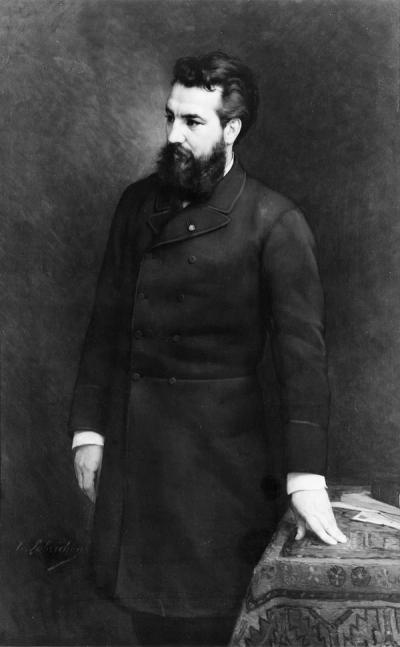
This is a love story; I’ll get that out of the way right now. “Who’s that?” I pointed to a picture in the entranceway of the Bell Homestead National Historic Site in Brantford, Ont., of a young man with a blazing brow, that unkempt hair and the intent inward gaze of a genius. “That’s Alexander Graham Bell,” said the museum’s curator, Robert Stanczyk. I was as astonished as the thousands of schoolgirls who’ve come through the homestead expecting the white-bearded Santa Claus version of the man we all learned about in Grade 4. Bell, of course, was more than a handsome face – much more. Giving us the telephone may have been the least of it.

Just beyond this pretty clapboard Brantford home
was Bell’s “dreaming place”
where the Grand River “flows to my very feet.”
It was there that the young man, his teeming sleepless brain calmed by the flowing current, got the notion of sound waves that would lead, first, to the invention of the telephone and, second, to the world’s inaugural long-distance call, to Paris, Ont., 13 kilometres away. This summer will celebrate the 150th anniversary of that call, with tours, re-enactments and a brand-new Bell memorial by artists Julia Jamrozik and Coryn Kempster, called Ahoy-hoy.
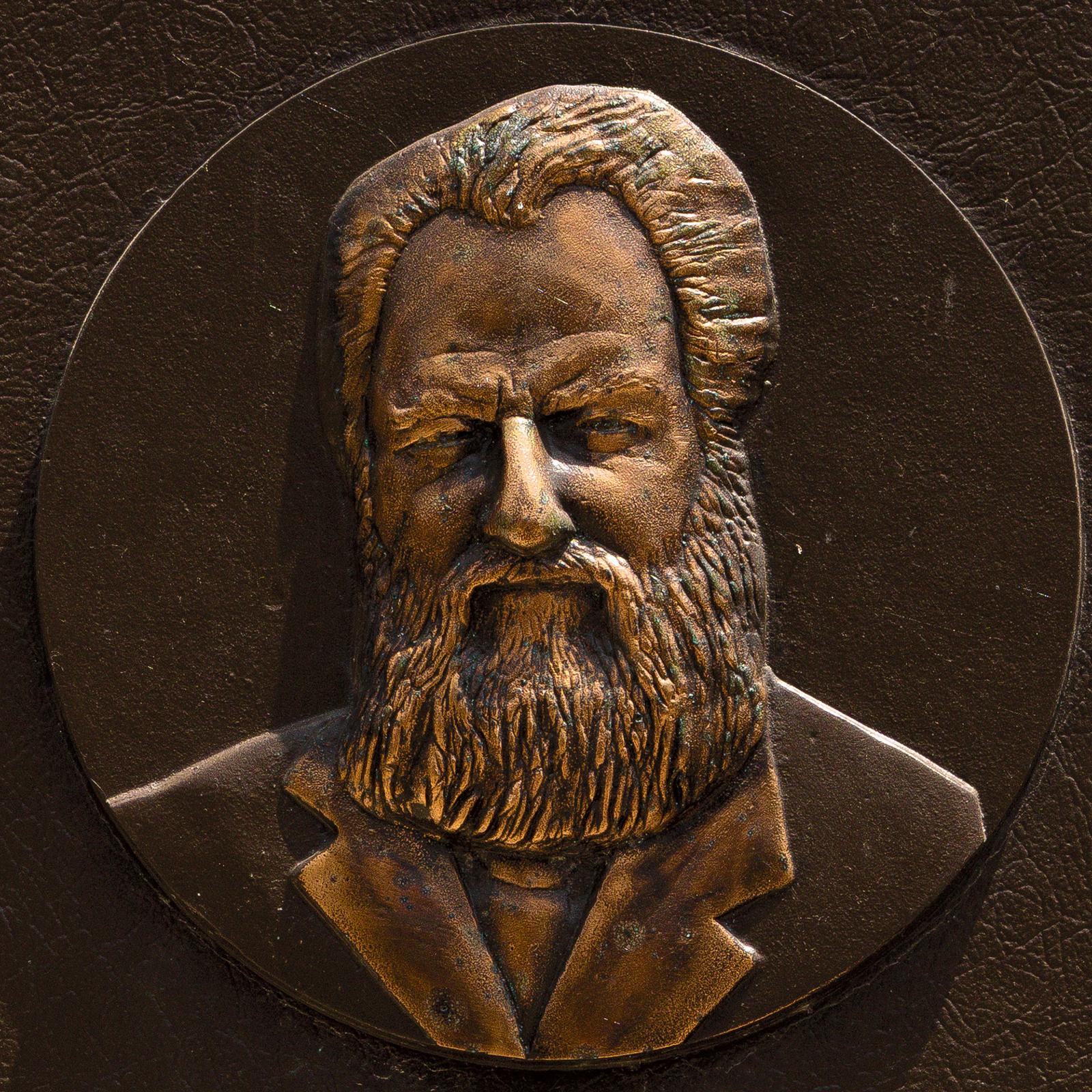
To understand the man and his legacy, however, let’s go back to the unveiling of Brantford’s original Bell Memorial, in 1917, when a robust and vastly white-bearded Bell, by now 70, spoke with a modesty so rare in our tech-trillionaire world, his words sound almost disingenuous reading them today. Except that in every important way, Bell’s speech exemplified who he was and what he left behind for us to model: a dispassionate and altruistic capitalist who put the benefit of the many before the wealth of the very few.
“I cannot claim what you know as the modern telephone,” he said, refusing to hog praise before the assembled eminences. “It was the product of many, many minds. All I did was to initiate the movement of the transmission of speech by electricity.” Contrast that with OpenAI CEO Sam Altman’s boastful lecture to students at California’s Stanford University in 2014: “You certainly don’t need to have everything figured out in a path from here to world domination, but you really want a nice kernel to start with.”
“Bell wanted to improve the world,” said author Charlotte Gray when I called her, bleary-eyed, from Paris’s Arlington Hotel, where I’d been awake most of the night page-turning her terrific 2006 biography of Bell, Reluctant Genius. Gray has written 12 books, historical biographies mostly, but she remembers this one with particular fondness, largely because of the man she came to know.
“I think perhaps I should have called that book The Reluctant Businessman because that’s really stayed with me,” she said on our call. “Bell’s benevolence was extraordinary. He wasn’t avaricious in any way.”
To wit: Edison, whose drive for the profitable aligns with the tech bros’, died with 1,093 patents – and if he could have patented his best invention, his own fame, it would’ve been 1,094. Bell, ceaseless thinker and tinkerer – ideally in his hut in Baddeck, surrounded by sheep – preferred the conceptual side of invention. In a patent-mad era, he died with just 31.
It’s hard not to love Bell, and we haven’t even met his best side yet: loving husband of Mabel Hubbard Bell, the wondrous woman he cherished for 45 years.
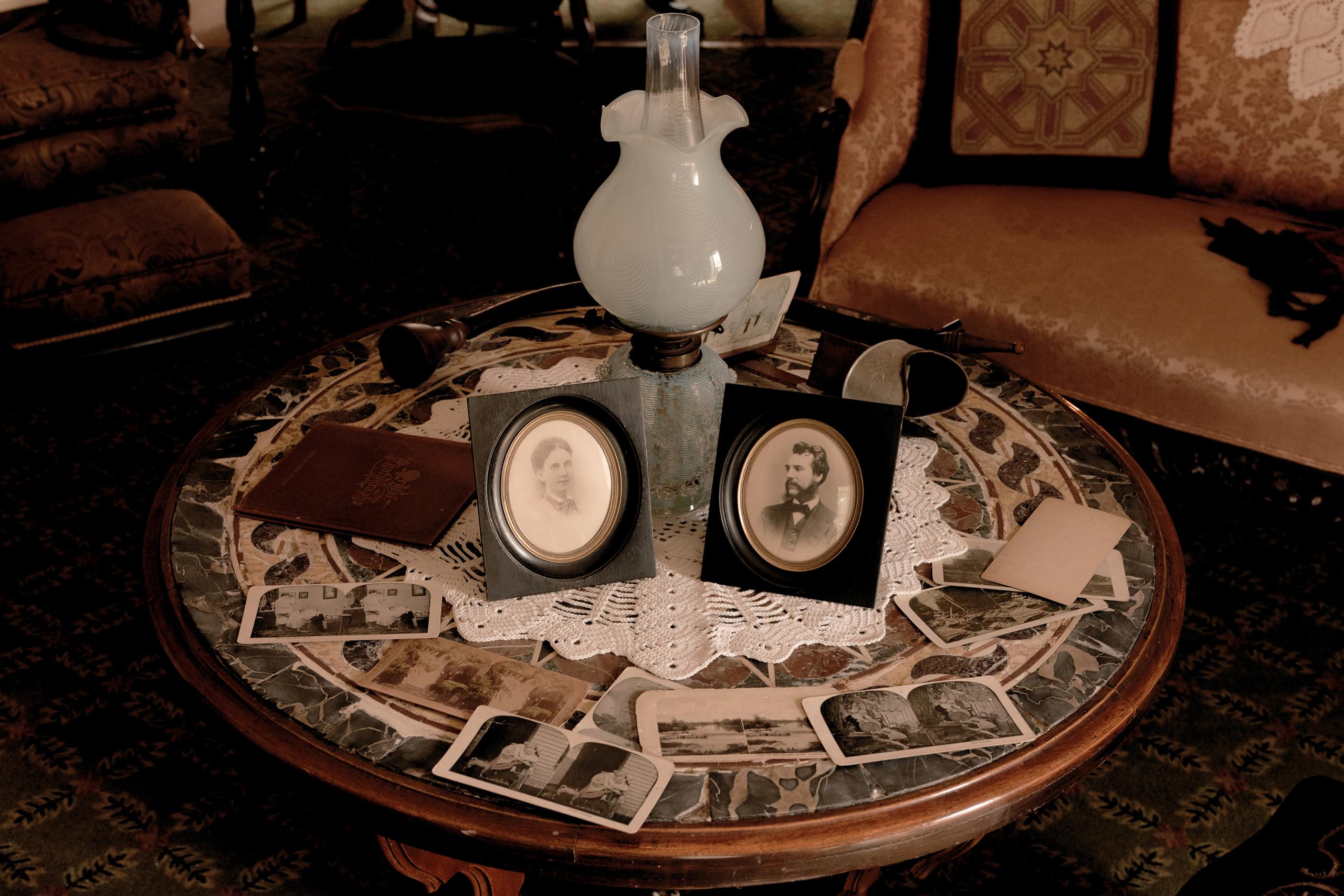
It’s hard not to love Bell, and we haven’t even met his best side yet:
loving husband of Mabel Hubbard Bell,
the wondrous woman he cherished for 45 years.
Alexander Graham Bell came to Canada to die. Tuberculosis, the AIDS of the 19th century – if the disease didn’t kill its young victims, its social stigma left them unmarriageable and unemployable – had already taken his two brothers at 18 and 25. Aleck, as he was known to those who loved him, had been given six months to live when his father, Melville, moved the family from England to Brantford, where the fresh air might save his last surviving child.
Many claim Bell as their own, and fair enough. Scotland, Bell’s birthplace, gave him an excellent education in science and engineering that would ground him throughout his life of research. The United States gave him a vital new citizenship in 1882 – official Canadian citizenship didn’t exist until 1947. America also gave him his beloved Mabel.
But Canada gave him life. “I think we also could claim he was happiest in Canada,” Gray told me.
Young Bell regained his strength to the hum of the gonzo industry of 1870 southwestern Ontario. Whistles at dawn summoned workers to 50 textile factories, piano factories, furniture factories, sewing machine and canned food factories – all creating products for their home markets within a 50-kilometre radius, when shopping local was the only option, before international trade and tariffs.
Brantford was the perfect place to dream big right in your own backyard, and that’s what Bell did. He used his deep knowledge of sound waves and the human ear; his mother, Eliza, had lost her hearing to scarlet fever as a child, and Aleck and his father were innovative teachers of the deaf, creating schools and a system of communication that allowed them to join a society that had long ostracized them. And then Aleck combined that knowledge with a leap of intuition: what if the human voice could be transmitted over a wire like the telegraph? Genius!
The effect on the world was immediate. Three-quarters of the population of North America were rural and isolated in the late 1800s. The ability to converse from town to town, voice to voice, united and empowered the humblest people. No wonder Stalin vetoed the telephone for Russia, as Charlotte Gray quoted him: “No greater instrument for counter-revolution and conspiracy can be imagined.”
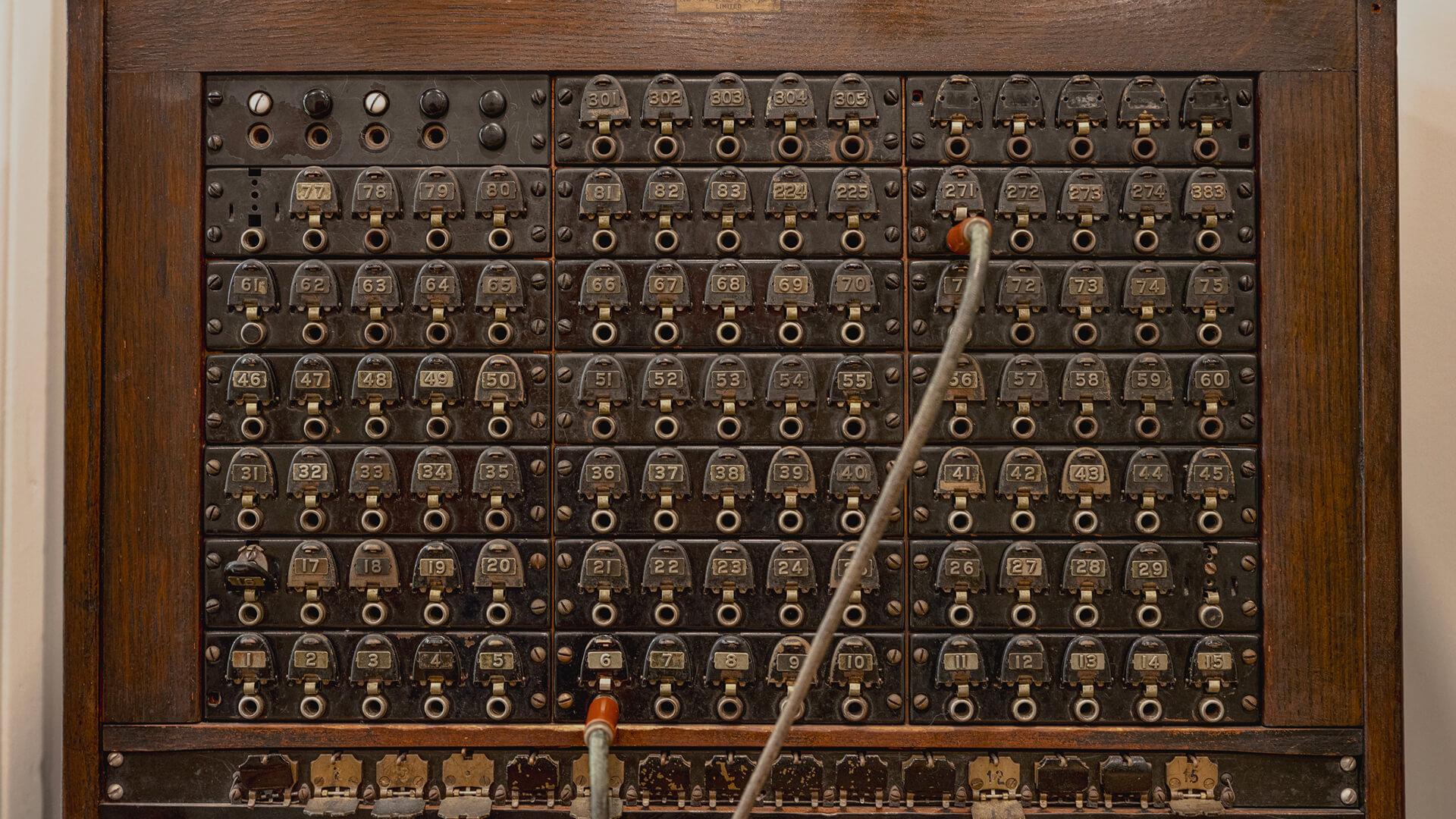
Bell’s invention made him wealthy and famous, which meant more time to think.
The high-strung hypochondriacal hypomanic stayed awake for days, “tingling to my fingertips” with ideas.
And not only ideas, but feelings: “It was perhaps inevitable,” writes Gray, “that when such a brilliant man fell in love, his emotions would spiral out of control.”
“Oh Cupid! Cupid! Cupid has succeeded in hitting me very hard!” This was Bell, in a book of letters called My Dear Aleck. He’d moved to Boston to help his father set up a school for the deaf and there fell hard for the brainy, beautiful and cultivated Mabel Hubbard. Like Bell’s mother, Hubbard had lost her hearing to scarlet fever as a child and was much protected by her parents. When Hubbard’s mother asked Bell to wait a year before he proclaimed his love to her daughter – he was 27, while Hubbard was 17 – he lasted one day before he burst into her holiday on Nantucket.
His written apology for coming on too strong runs 13 pages in that volume of letters. Hubbard agreed with her mother that they should wait, and she wrote “Mr. Bell” a sensible single-paragraph response. In a subsequent polite letter, she mentioned her surprise that grapes could grow as far north as Brantford, no doubt hoping it was a safe topic.
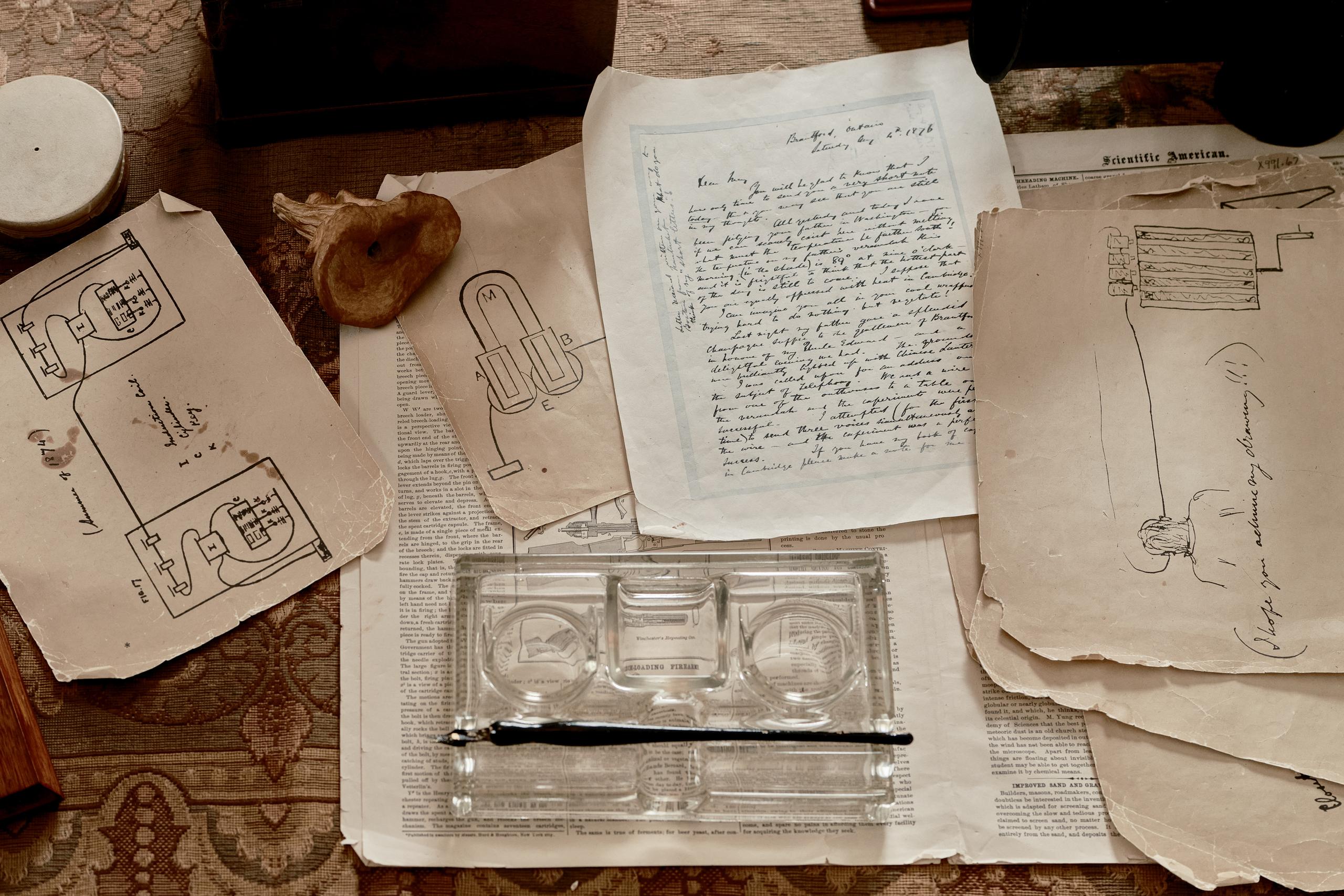
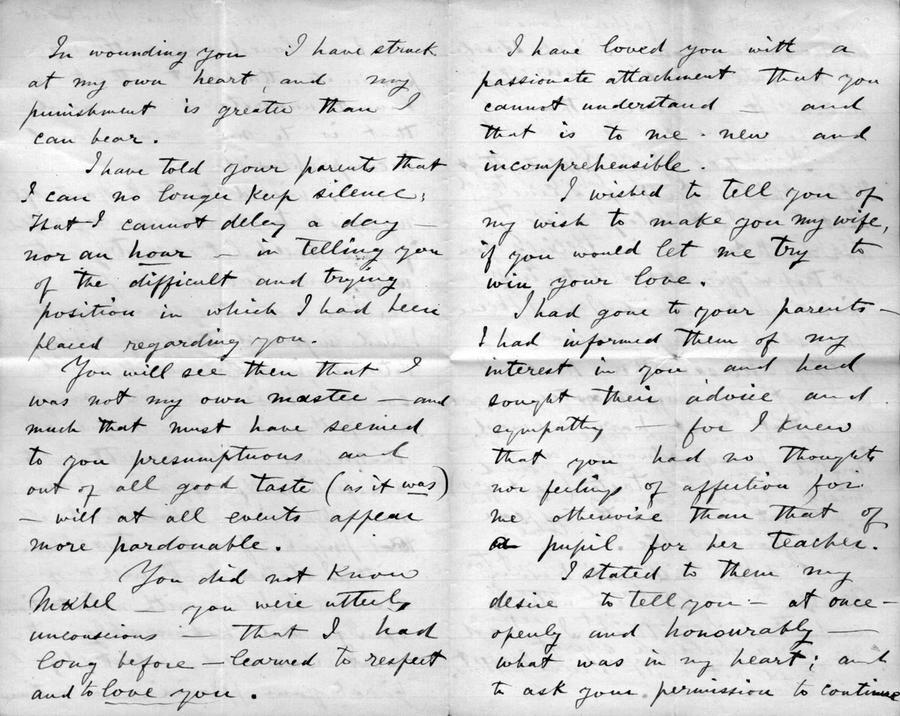
His reply ran seven pages.
They would marry, of course. Bell’s sign-offs on love letters throughout their marriage was vastly superior to “TTYL,” one of the many shortcuts to actual manners the hand-held phone has wrought: “Please give my love to your grandfather, grandmother, father, mother, Gertrude and Grace and Auntie Bertha when you see them, not forgetting, of course to reserve a generous share for your dear self. Your loving Aleck.”
Hubbard would come to return his great love and to manage, with humour and a modicum of strictness, his manifold eccentricities. “The china had to be plain white,” Stanczyk, the Bell Homestead curator, explained on our tour, “because he didn’t like the butterflied pattern staring at him.” (I looked it up on my phone, naturally: fear of butterflies is called lepidopterophobia.) Bell pounding Beethoven’s Fifth would shake the house at 3 a.m. He had to be woken at 9 a.m., so he could know what time it was, but be allowed to go back to sleep because he was late to bed and late to rise his whole life. Porridge must be cold, and his wife’s only stricture when he invented a tube for drinking soup (because it was more efficient than a spoon) was that he keep it clean.
“I was originally going to write a book about Mabel,” Gray told me on our second call, “but I could not elbow him off the page.”
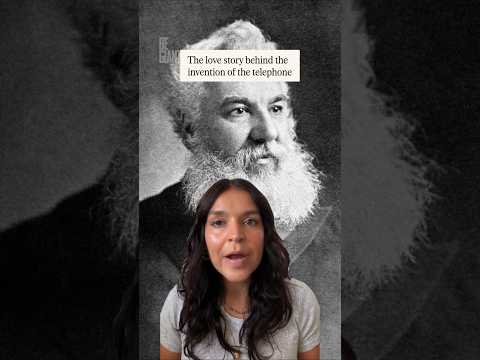
But don’t dismiss Hubbard as a mere handmaid to genius. Bell would’ve invented the telephone without her, said Gray, but not won the race for the patent. Bell gave her all his shares in the Bell company on their wedding day, so she could manage the business side of things, which she did with a firm hand.
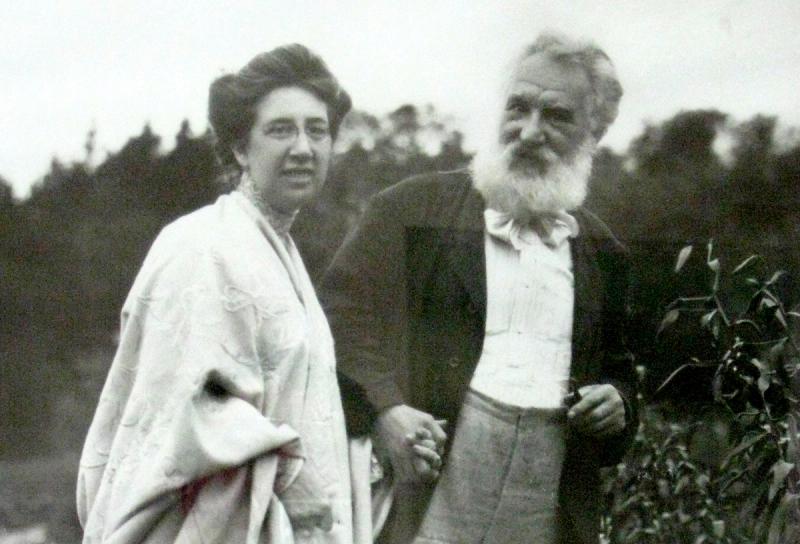
Mabel and Aleck are a love story for the ages. They hold hands in photographs, in their 50s and beyond, two people in love but not only that: he’d have been tapping her palm to spell words so she could understand what was being said, as he did on his deathbed, speaking into her hand to his final breath. “Don’t leave me,” Hubbard wept, and so did I at her terrible grief over the death of this great man. Two days later, all 13 million telephones in the United States and Canada were silenced for a minute as Bell was lowered into his grave in Baddeck. Hubbard joined him five months later. Canada gave them that too – a final home in which to rest together.
I spent a couple of days in Paris and Brantford. I went where Bell went, saw what he saw, always with my phone in my hand. At the Bell Homestead, in the study where he laboured over the first phone – the rectangular box with a hole on top was on display – the curator and I paused in that modern unspoken way to drop out of the scene and check our phones, likely to search for some fact about Bell. “Oh, my God,” said a passing visitor, pointing from the big box to our small devices. “Look how far the phone has come.” Bell would’ve hated that. Facts, maps, photos, rides, weather, texts, emails, apps and opinions. His telephone was never meant to be omnipresent. For Bell, the phone had gravitas. It was not a way to scroll through life.
The next day, I asked the woman at the front desk of the Arlington Hotel to point me to the shop in Paris where Bell received the world’s first-ever long-distance call. “My cousin actually works at a place that has a whole shrine to him,” she said when I told her I was writing a story about Bell. “I was like, Wait! I know that guy.” Bell would’ve loved that. His legacy was never intended to be self-aggrandizing; he believed in a more accessible world – beginning with the deaf people he worked tirelessly to include in a society that wanted them cast out.
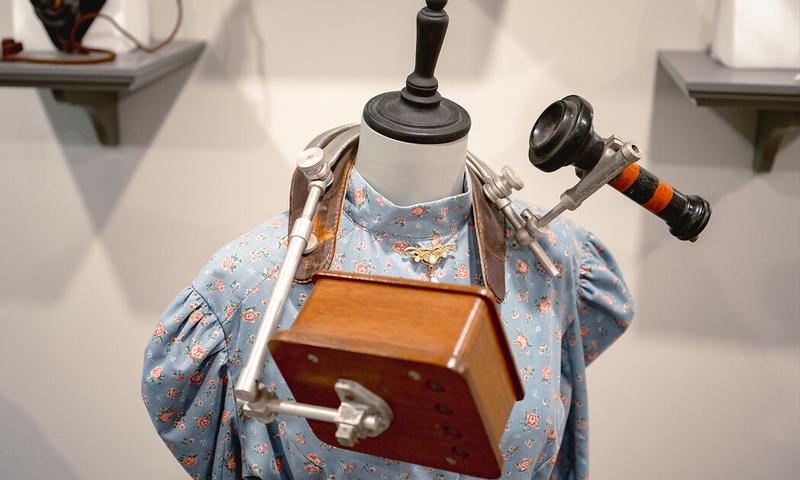
This friendly young woman, I discovered, not only held down the hotel’s reception desk but also helped clean the rooms and put out breakfast each morning. Doing a job three people would’ve done at one point, as far as I could see. Standing in the hotel lobby chatting, I remembered one of my favourite stories about Bell: in the mid-1880s, he perfected an automated central switchboard that would do the work of 20 telephone operators; Bell refused to file for a patent because “it would turn all of those poor girls out of their jobs,” writes Gray.
By way of contrast, here’s Sam Altman again, in 2025, being interviewed on a similar subject: If AI means current jobs get wiped out, maybe they weren’t even “real work” to start with.
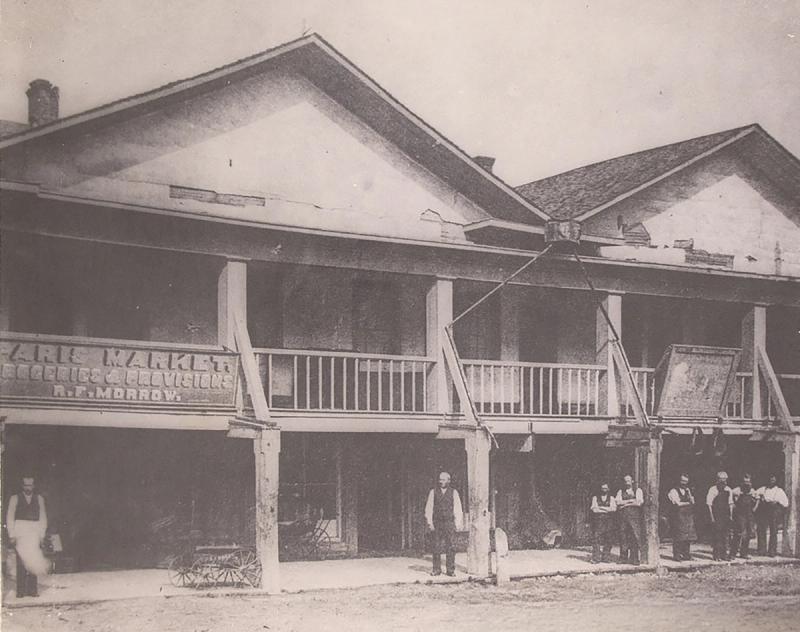
I headed across the street to where the woman at the desk had vaguely pointed and found the brass plaque outside Il Posto Giusto Pizzeria e Bakeria. “On this site Alexander Graham Bell, inventor of the telephone, received from Brantford, Ontario, on August 10th, 1876, the world’s first successful long distance telephone call.”
It wasn’t a pizza parlour then but Robert White’s Boot and Shoe Store. Bell and a tightly packed crowd of spectators listened first to terrifyingly loud pops and scratches over the 13 kilometres of telegraph lines he’d essentially hacked for the call. And then, the Brantford crew clearly quoted Hamlet and sang the Liverpudlian folk song “Maggie May.” The astonishment was absolute. Today, it would be as if an entire person, not just their voice, were teleported over.

The communication was capped by the booming baritone of Bell’s father, who had said he was otherwise engaged that night and so wouldn’t make it to his son’s long-distance call that would change the world, even though it would take place just a short walk from the Bell homestead where he lived. (Father and son had a complicated, sometimes contentious relationship.) “Your presence in Brantford at this time completes my joy tonight,” Aleck immediately telegraphed his dad.
Note he didn’t say so into the telephone. Bell’s other vanishingly rare trait – the one that won him the prolonged court battle for the patent of the telephone, which at least 600 competitors had tried to claim as their own – was his adherence to facts. In that Brantford speech in 1917, when he told the gathered eminences that the city could claim the invention of the telephone, he added a point of clarity before the crowd got too puffed: the first long-distance call was indeed made from Brantford in 1876, but the first two-way conversation took place in Boston a year later. “That was the condition of affairs, so you must not claim too much,” Bell told the crowd, stating his lived belief.
My next stop was the Brantford park where Ahoy-hoy, the new memorial to Bell, will be erected: two giant discs, placed about 15 metres apart, that will allow people to talk to each other. Toronto artists Coryn Kempster and Julia Jamrozik wanted to “get strangers interacting,” they told me when I met them later in Toronto.
“We walk around with supercomputers in our pockets, so talking to somebody on the other side of the world isn’t magical at all,” says Kempster, originally from Brantford. They imagined the early days of the telephone, when such a connection to the town or street over was miraculous, and “just tried to picture, what was that experience,” explains Jamrozik.
Bell would’ve loved that. He was both an unstoppable talker and an attentive listener to all he met. He communicated with everyone, however they “heard” the world. The idea of strangers wasn’t in his vocabulary.
The way it sometimes happens in reporting a story and following random leads, I ended my time in Paris at 3 Brothers Classic Rovers, “the largest dedicated supplier” of vintage Land Rover parts in Canada. I’d been told the Paris-born brothers knew everything about Bell, but instead I met Jeremy Wylie, the managing director of the shop, newly arrived from Mississauga, Ont., to take over the business.

Over the next hour, I learned – a lot – about the allure of vintage Land Rovers. Such as, driving these complicated hands-on vehicles was more about the journey than the destination. Bell, king of tinkerers, would’ve fiddled with snorkels and winches and air boxes to not just keep the Rover going but also make it faster, stronger, better.
Wylie gave me a lift back to the centre of Paris in his own Land Rover. I held onto a strap (no seatbelts) to keep myself from catapulting into the street (no windows), channelling the great Mr. Bell and his soaring inventions. You don’t see a lot of Land Rovers, and everybody waved as we drove by.
“Ahoy!” I waved back.
Bell would’ve loved that.