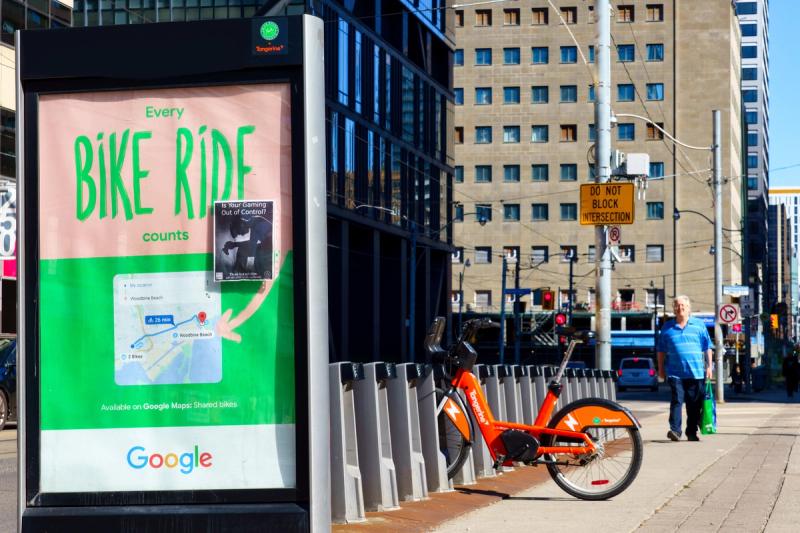
Over the summer, Canada quietly set an impressive new record. And no, it wasn't on the soccer pitch, or at any other sporting event. On June 13, Bike Share Toronto announced a new all-time ridership record: a massive 49,048 Toronto riders chose a bike over a cab, Uber or TTC.
This was yet another good news day for bike sharing, officially known as shared micromobility, which with no exaggeration has absolutely exploded across Canada over the past 15 years. In 2010, the National Association of City Transportation Officials counted some 3.7 million North American riders using a bike-share program. By 2023 – get ready for this – ridership had spiked to 157 million. In Toronto alone, ridership has doubled since the pandemic and only trends upward.
“The last decade has revealed such an emerging, evolving and exploding industry,” says Mia Kohout, CEO of Vancouver Bike Share.
But rapid growth is both a blessing and a curse. “Our biggest challenge right now is that the program is so popular,” says Jarrett McDonald, VP of operations at the Toronto Parking Authority, which includes Bike Share Toronto (BST).
Meeting the moment is a tall task – but Canadian bike-sharing companies are coming up with inventive, experimental and unconventional solutions to the consistently crunchy problems that plague bike-share providers across the continent.
The problem: No bikes
The solution: Bribe users to return bikes to empty docks with points, perks or credits
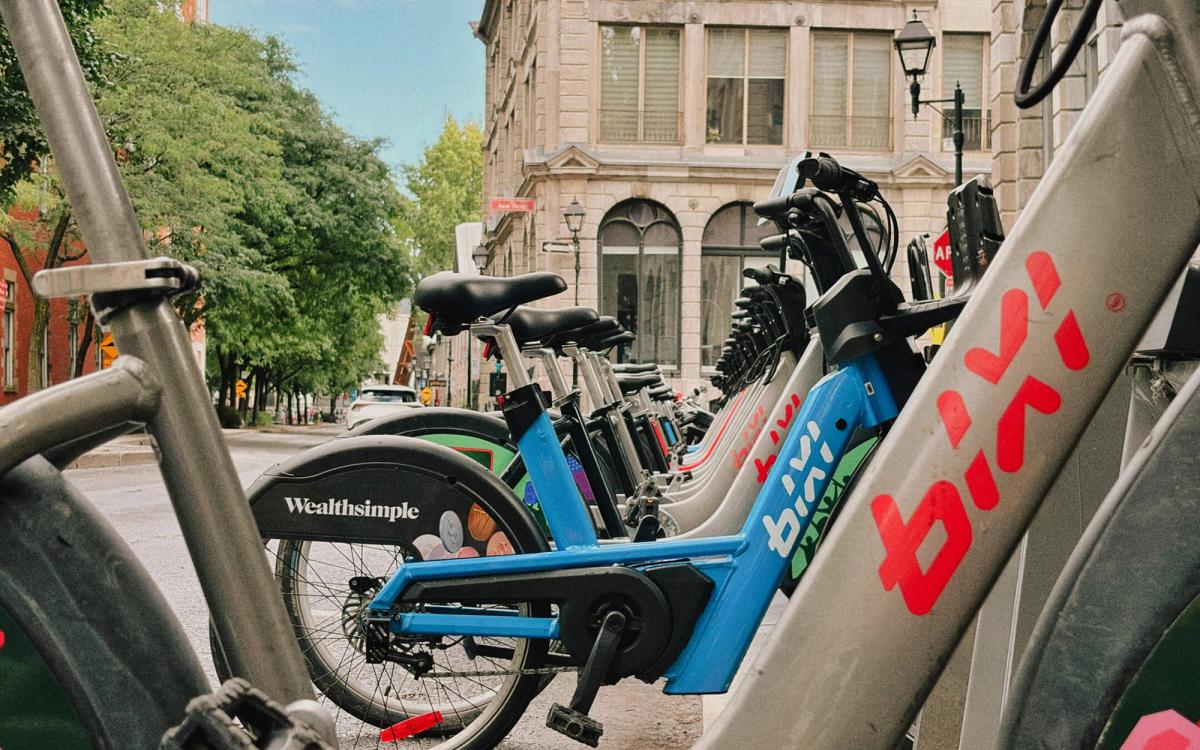
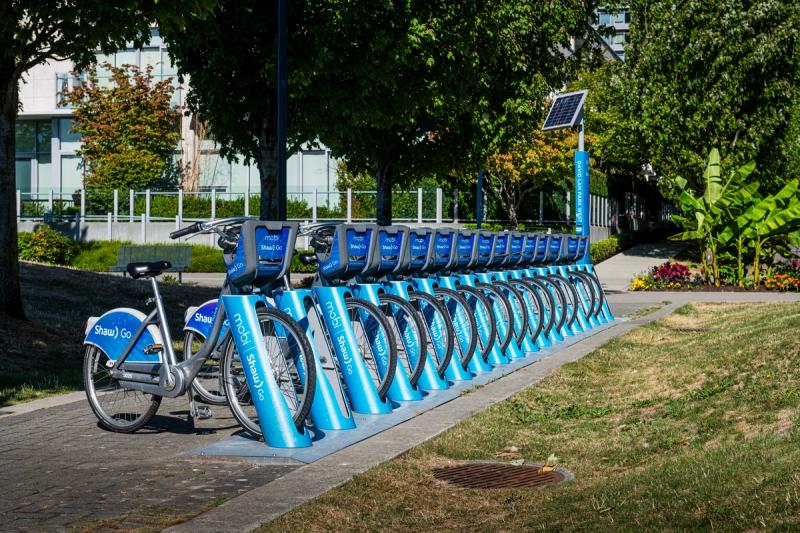
Would-be riders are inevitably frustrated to discover an empty dock and no bikes in sight. Theoretically, they should’ve checked the app in advance, but a real-time map with zero spots in your vicinity is just a high-tech take on the same problem: redistribution. All too often, riders from the city outskirts score their wheels in the morning and head downtown for the day. But by the end of the workday, many bikers are too tired to ride home and opt for other transportation, leaving their bikes downtown (and/or downhill), exacerbating the same problem the following morning. BST resorts to a late-night van that drives around the city redistributing bikes across 25 wards, which of course requires hired humans and carbon-emitting traditional vehicles. Since this arguably defeats the point, other cities are thinking outside the dock: Montreal’s BIXI bike system allows members to earn points and perks for riding bikes from crowded to empty stations, giving free rides to those willing to deliver bikes to high-demand zones. Similarly, Hamilton Bike Share offers “return a bike” credits to encourage users to return rogue bikes back to a hub.
The problem: Too many bikes
The solution: Different docks for pickup and drop-off
The flip side of the above? The dreaded “bike clumping,” where riders arrive at a dock, only to find it full, leaving no spots to unload their bike. Luckily, this challenge is usually predictable – like at those six FIFA games in Toronto, a Taylor Swift concert or just Yonge & Bay Streets on a weekday – and therefore solvable.
“To mitigate, we have valet stations where we manually take the bikes out and corral them off to the side,” says McDonald, who’s got 300 parking facilities that can store extra bikes and refill docks as necessary.
Worse still than no docks, perhaps, is an empty but broken dock that won’t let you return your bike as the clock ticks (hot tip: ice and snow often clog docks in the winter, so choose one in a sunny spot). For a small “convenience fee,” Hamilton’s primarily hub-based hybrid system lets riders lock their bike elsewhere. Evolve in North Vancouver uses designated pickup and parking spots. (Pro: your bike and dock will be ready when you are; con: no meandering if you change plans.) And BIXI uses AI to try to outsmart clumping before it happens. If it still occurs, BIXI uses hired “bike valets” to attend to busy stations during peak hours so riders can dump their wheels and get on with their day.
The problem: Too expensive
The solution: Discounts for students, seniors and low-income users
Depending on where you are and whom you ask, bike sharing is either dirt cheap or far too expensive. Costs/plans vary widely, but for comparison’s sake, an annual membership can cost as low as $105 (for unlimited 30-minute rides in Toronto) and as much as $169 (Mobi by Rogers in Vancouver). Mobi does offer hefty discounts to seniors and low-income residents, however. And students fare better in Hamilton, where Canada’s first tuition-integrated bike-share pass launched in 2024. At McMaster, all full-time undergrad and graduate students can get a year-round pass for less than $25, whereas a partnership with U of T offers BST riders up to 20 per cent off. BST also offers 20 per cent discounts for tenants of Toronto Community Housing, while Ontario Disability Support Program recipients get all e-bike fees waived entirely. Most bike shares also operate some kind of collectable rewards system – like the AMI BIXI rewards program – that can be cashed in for free rides.
Get our weekly newsletter – the people, places, and ideas revealing where Canada is headed.
The problem: Not enough funding
Solution: Naming rights for big business – and regular folks
Like every other startup on the planet, bike-sharing networks struggle with both startup capital costs and ongoing operating costs. In Montreal and Toronto, capital costs (like new bikes and docks) are paid for by the city. Meanwhile, Vancouver’s government isn’t nearly as generous. “We're a unicorn in North America – maybe the whole world – because we're the only station-based bike-sharing program that doesn't receive city subsidies,” says Kohout. No wonder, then, that they’re named Mobi by Rogers, as they depend more on ridership and sponsorships to balance their bottom line.
Still, Mobi’s by no means the only bike-share company to hitch onto richer endeavours. Last year, BIXI partnered with Wealthsimple to brand a fleet of 3,500 e-bikes. As a result, they’ve got the cash for flashy contests and giveaways, like this year’s annual grand prize fund, where for every hundred trips by riders (affectionately called “Bixists” by the company), Wealthsimple puts a buck into a prize pot that’s expected to exceed $100,000 by the end of the season. Smaller, local fundraising helps too. In Hamilton, community members purchased the right to name a bike – among them Flapjack, A Sharrow Escape, Hypnotoad and Fig Newton John, printed on fenders to encourage buy-ins and increase visibility.
The problem: No cohesion
The solution: An integrated transit system that includes bike sharing
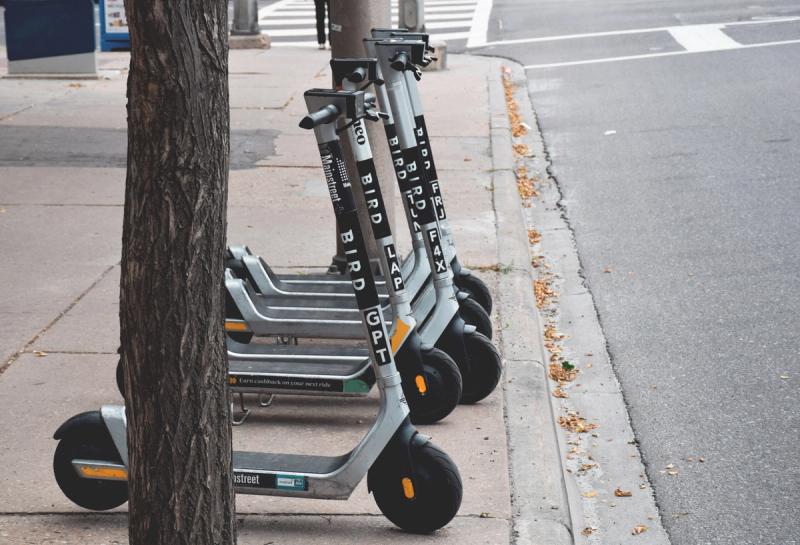
Vancouverite Uytae Lee has beef with bike-sharing in his city – or at least he’s frustrated by the lack of collaboration, which he details in his YouTube video “The Bike Share Dilemma.” Each of the region’s municipalities has a unique contract with various bike-share companies. Besides Mobi downtown, there’s Lime in Burnaby, New Westminster and Victoria, Bird in Surrey and Kamloops and Evolve (aka Evo) on Vancouver Island and the North Shore. “This is a messy and disjointed network,” Lee says in his video, “but it’s also a bit of a missed opportunity.”
He advocates for collaboration, an area where Evolve is leading the way. It’s operated by the British Columbia Automobile Association, which also operates Evo Car Share, meaning the same convenient app could unlock a rental car to get to your preferred neighbourhood and then a bike (or e-bike or e-scooter) once you get there. Now imagine if a single metro pass paid for subway, streetcar, bikes and scooter rides? Transit takers and bike sharers alike can dare to dream.
The problem: Accessibility (or lack thereof)
The solution: The still slow, but very steady rise of e-bike and adaptive options
Not everyone can or wants to pedal a bike through an urban centre. Differences in physical mobility, landscapes and geography, not to mention personal preference, have many swapping bicycles for e-bikes or scooters. They’re newer, rarer and more expensive, but e-bikes are (slowly) being added to bike shares across the country. Mobi has about 600 e-bikes to 2,000 pedal bikes; Toronto’s got about 2,500 e-bikes to about 8,000 pedal bikes; and Montreal’s BIXI has 3,500 e-bikes to more than 13,000 pedal bikes.
In 2022, Hamilton Bike Share launched its adaptive bike-share program using repurposed shipping containers in two city parks. It’s the first of its kind in Canada, according to Julia Hamill, programs & partnerships director. “We regularly have folks travel from out of town to access it.”